
red bean pancake
a deep-dive on a chinese restaurant classic

Welcome to Singapore Noodles, a newsletter where I share recipes from my kitchen in the Netherlands. Archived recipes and other content can be found on the index. My cookbooks, Wet Market to Table and Plantasia, are available for purchase here and here respectively. Thank you for being here, and enjoy this week’s post! ✨ — Pamelia
RED BEAN PANCAKE
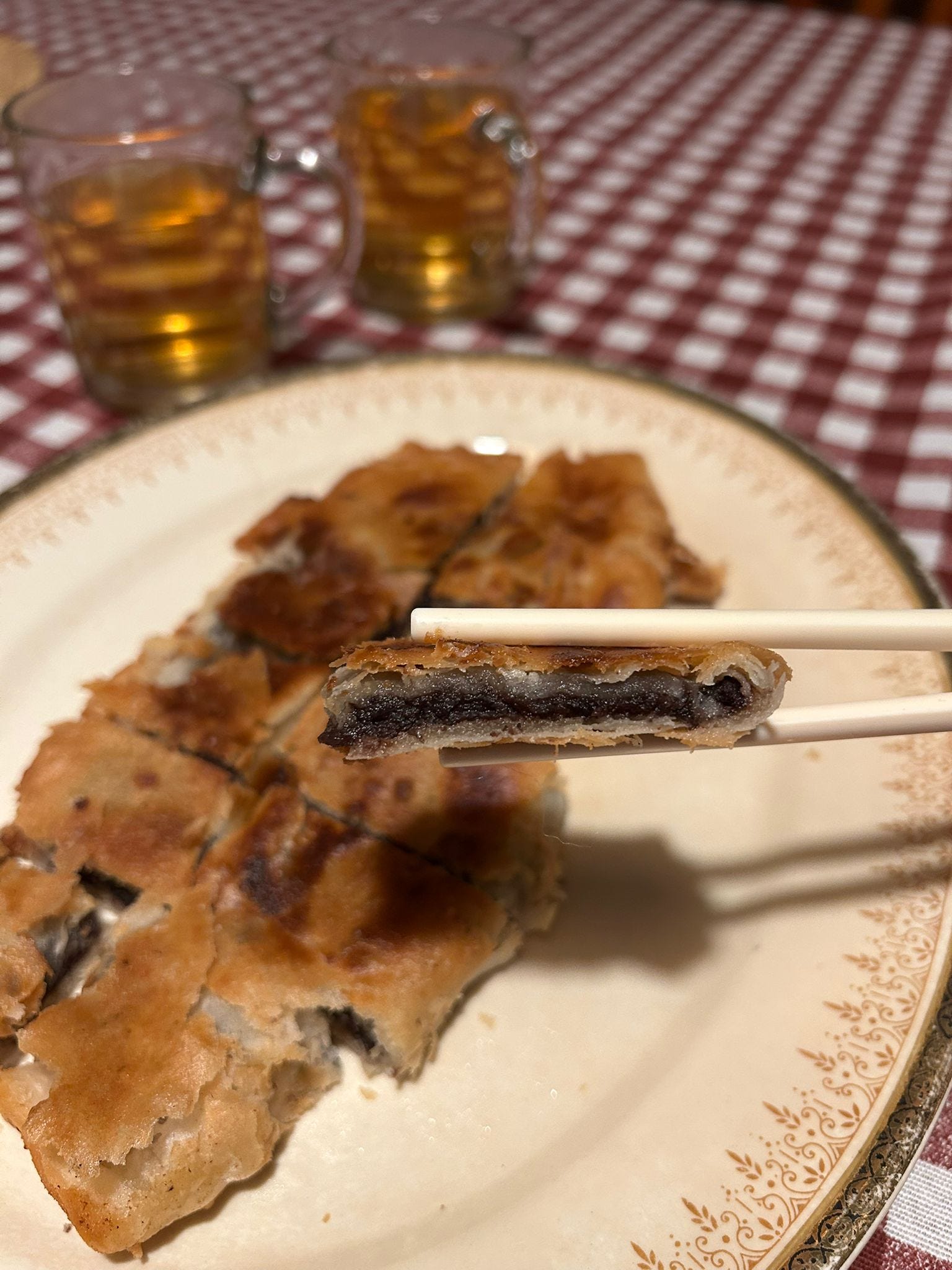
Happy new year to all celebrating! Given that it’s just two of us celebrating at home, we didn’t have anything extravagant — just a very simple, no-frills pot of steamboat. We’re approaching the tail end of winter and it’s been raining and cold (it even snowed a couple of days ago), so I’ve been craving sweet things, specifically red bean pancake — thick, indulgent bean paste encased in thin, crispy pastry. I’ve never made it before because I could never find a recipe that looks similar to the ones I’ve had at Chinese restaurants, but new year festivities and it being so cold here proved motivation enough. The best part? Red bean pancake can be made with pantry essentials found at any supermarket.
Red bean paste
Any self-respecting Chinese restaurant would make their own red bean paste from dried red beans. I’ve tried it and it is a lot of work and time to soak the beans, simmer them till soft, and fry them up with sugar into a sweet paste. As a shortcut, I once bought red bean paste at the Asian grocer, but was shocked at how bad it tasted.
Canned beans produces a far superior red bean paste to the store-bought version. In the absence of canned red beans (also known as adzuki beans), you’ll be surprised how close you can get to the flavour and texture of red bean paste with canned kidney beans or canned black beans.
I drain and briefly rinse the beans under a tap to get rid of the starchy liquid and any tinny taste, then blitz them with sugar and oil. The oil is crucial for a silky, indulgent mouthfeel. Pour the blended slurry into a small saucepan and cook it gently until the paste holds its shape, and voila you have red bean paste in five minutes and very little elbow grease!


The “pancake”
The red bean paste is the easy part to figure out. What’s hard to decipher is the pancake component. Many tutorials use thin crepes, made from a simple wheat flour and water batter. I saw an especially promising recipe that adds glutinous rice flour and an egg to the batter for a subtle QQ chew and tenderness. While the crepes turned out well, they bloated with air and burst at the top when deep-frying. I was also disappointed that they didn’t develop the richly golden appearance of red bean pancakes, and that they lost their crispness and turned soggy within minutes.


But then I thought: what if the “pancakes” weren’t pancakes per se, but a sort of dough rolled out very thinly. Wex made the suggestion of trying something like the dough used for Taiwanese spring onion pancakes. I chose to go with traditional Chinese puff pastry in the end, which unlike European puff pastry, is neither time-consuming nor challenging to make. You make two doughs — an oil dough and a water dough — wrap one in the other, and then perform a simple lamination by rolling the dough out like a swiss roll, rolling it out, then rolling it up again. No cold climate or large work surfaces required.


Compared to the red bean pancakes made with crepes, these puff pastry ones were a clear step-up. They were distinctly flakier and browned much better. It was clear that I was on the right track. That said, the texture was a lot sandier and softer than I expected. I wanted something with a little more structural integrity and crunch.
The first thing I examined was the overall amount of fat in the pastry. Sandy pastry, whether it is in the case of shortbread or tausarpiah, is a symptom of fat “overpowering” the gluten structure. I adjusted my ratio of oil dough to water dough from 1:2 to 1:3, and decreased the amount of oil in the water dough.
Because the oil in water dough helps the dough roll out thinly without springing back too much, I compensated for the lowered oil content of the water dough by substituting boiling water for room temperature water. The boiling water denatures flour proteins, thus limiting gluten formation. The result made me proud:
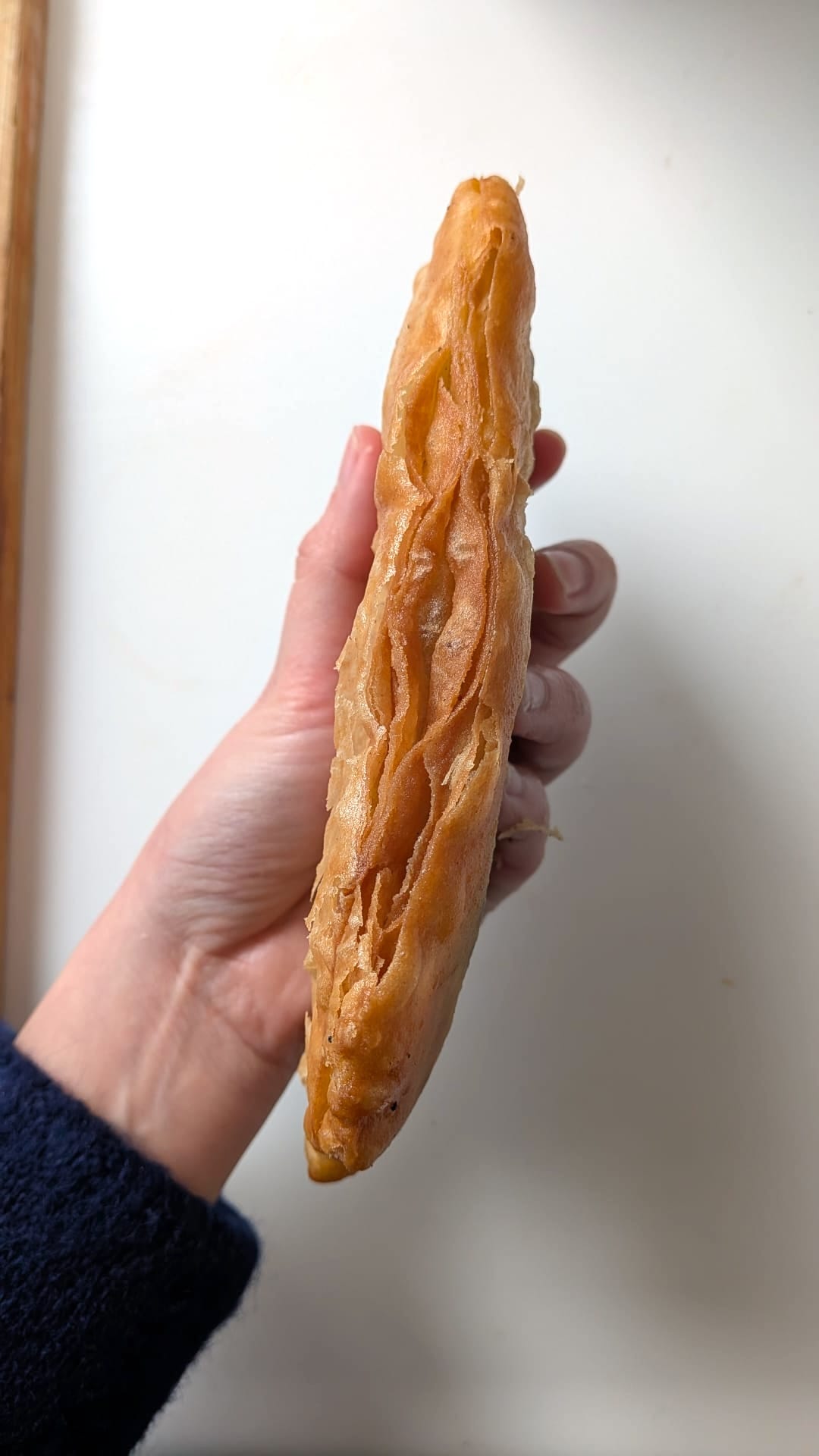
The pastry puffed magnificently in the oil, and the layers were audibly crunchy and stayed crunchy long after the pastry left the wok. The fine layers reminded me of thin, bronzed phyllo on the top of spanakopita, and the biggest victory is that it stayed crisp for a long time. While it seems like a different sort of pastry (flakier) than the restaurant-style red bean pancakes that I recall, I’m not complaining.
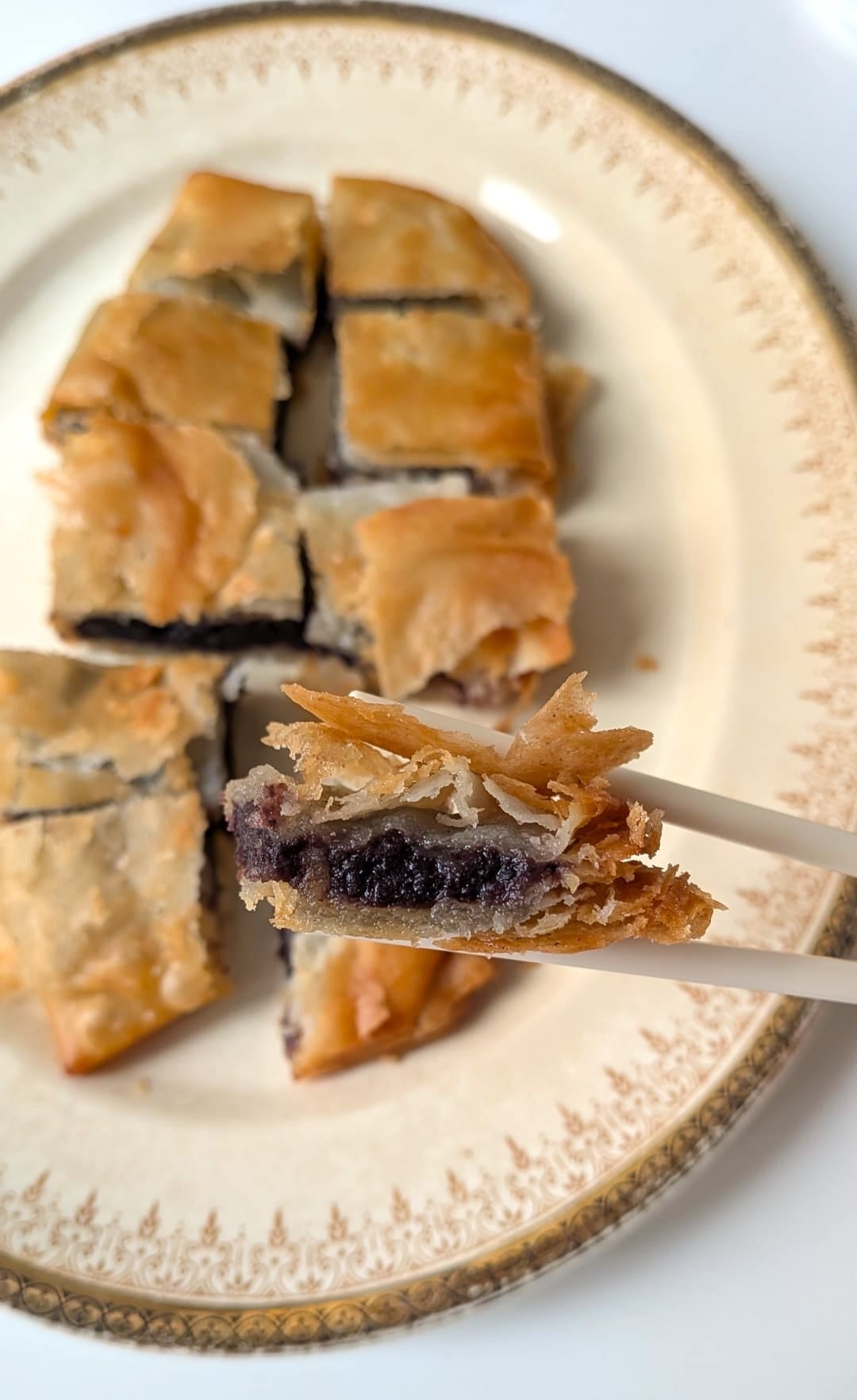
This is a great dessert to serve at the end of a Lunar New Year gathering — fried à la minute, or right before your friends and family arrive (the pastry will stay crisp).
The following recipe makes 3 red bean pancakes, each a good amount for 2-3 people each. I wouldn’t scale the recipe down further; because it retains its crunch well, extras can be kept in an airtight container at room temperature and enjoyed at a later time.
Red Bean Pancake
Makes 3 pancakes (serves 2-3 people each) | Vegan option