
midweek kimbap
two ways

Welcome to Singapore Noodles, a newsletter where I share recipes from my kitchen in the Netherlands. Archived recipes and other content can be found via the index. My cookbooks, Wet Market to Table and PlantAsia: Asia’s Vegetable Wisdom in Recipes, Stories, and Techniques, are available for purchase. Thank you for being here, and enjoy this week’s post! ✨ — Pamelia
The trouble with cooking diversely is that you end up with a pantry full of partially used items a lot of the time. For months, I’ve had an opened packet of nori sheets that I’ve been wanting to use, but have been feeling a lot of inertia to. The obvious way to use it up is in the form of a roll, such as kimbap, which I love. Kimbap looks similar to sushi, but the main difference is that its rice is seasoned with sesame oil and salt, rather than sweetened rice vinegar. It also tends to be a complete meal in and of itself, chockful with a variety of proteins and greens. With the nori already turning from glossy black to a dry, reddish, it was now or never.
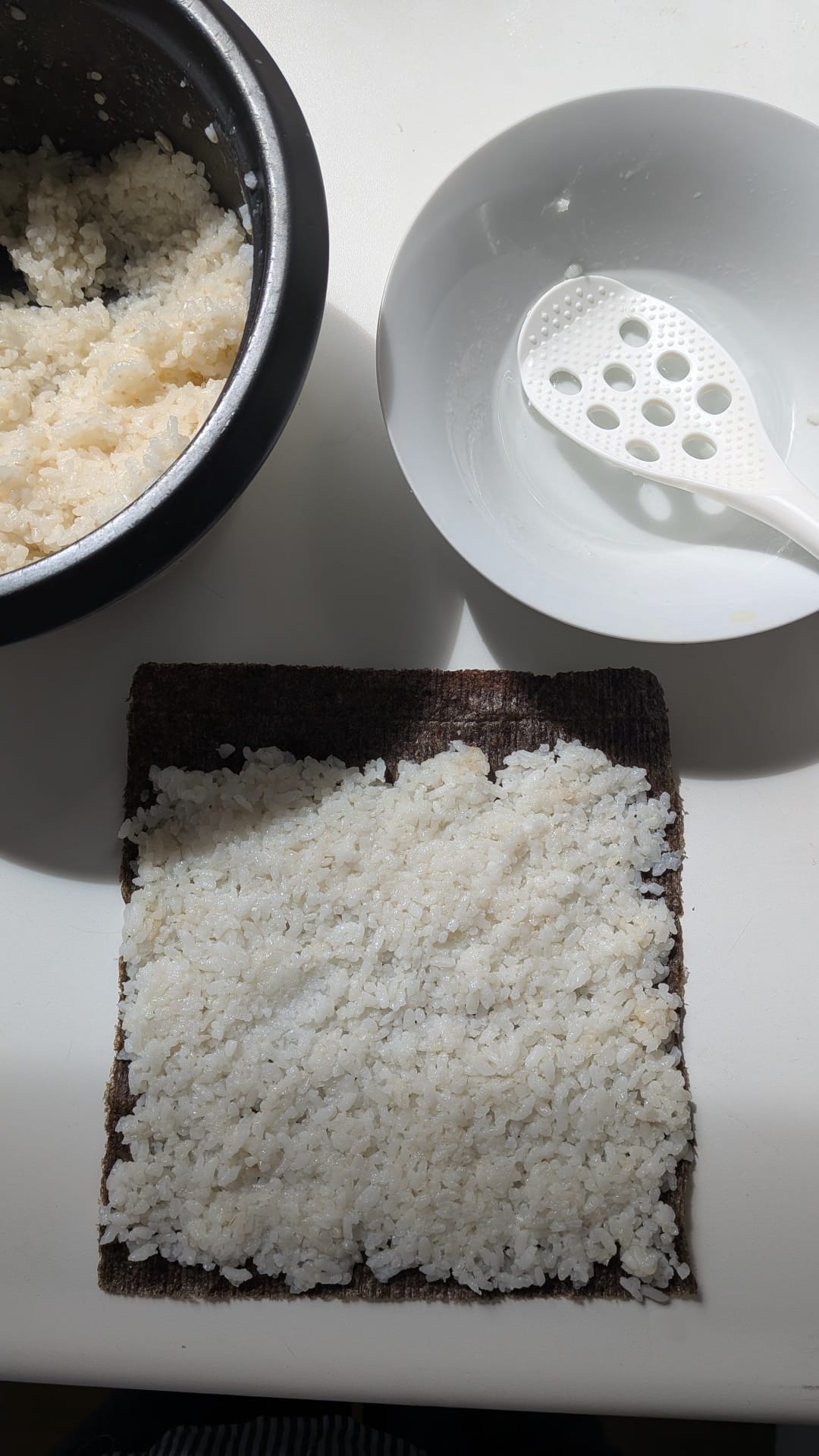
The easiest way to approach kimbap, I’ve found, is to make the rice in advance and zap it in the microwave until warm and pliable when you’re ready to make the rolls. When considering the fillings, it’s helpful to think of kimbap as a vehicle, just as a sandwich is a vehicle. You can get really playful with them, and make things as simple or fancy as you want.
The vegetables I’ve chosen are accessible ones that I could get from any supermarket and cook quickly. Baby spinach wilts in a pan in no time at all, and julienned carrots (which I buy already prepped) — by virtue of their thinness — cooks in seconds (it’s really to take the rawness out of them than anything else). I keep the seasonings for the vegetables minimal — just salt and sesame oil — and let the protein be the star and carry the main flavour.
Gochujang is a condiment I always have in my fridge — it adds so much flavour without much work. One day this week, I made kimbap with gochujang-marinated pork, a simplified version of a dish I make on weeknights. Another day, I simply mixed some sliced smoked salmon into gochujang mayonnaise — it turned out so well that both Wex and I preferred this to the pork. It’s brilliant on many fronts. Compared to fresh fish, smoked salmon keeps well and is, thus, a staple we often already have in our fridge. Though cured and smoked, it still retains the tender, slightly chewy texture of raw fish, and when mixed into gochujang mayonnaise, it comes very close to the kind of spicy tuna that you might encounter in sushi.


Several things to note for kimbap-wrapping success:
Use warm, but not hot rice: Cold rice is slightly brittle and will not form a thin, even layer over the nori. Hot rice, on the other hand, will cause the nori sheets to tear. Warm rice is ideal, and a generous drizzle of sesame oil helps further to render it pliable and easy to work with.
Limit the moisture in the fillings: Fillings with too much moisture may cause kimbap to fall apart. This means squeezing water out of spinach, frying the marinated pork sufficiently so that the marinade glazes the strips etc. (For the same reason, I also cook my rice with slightly less water than usual.)
Leave a border: When spreading the rice on the nori, I leave a border. Same goes for when I arrange the toppings on the rice. This way, when you roll the kimbap up, the ingredients naturally move into the empty space and everything lines up neatly.
Roll the kimbap up tightly: Some people use a bamboo mat or plastic wrap — I find this cumbersome, but you might find that it helps. After rolling the kimbap up, compress it with your hands. With a firm roll, slicing becomes a breeze. Just as it’s hard to cut a loose string, a taut kimbap will be much easier to cut than a loose, falling-apart one.
Slice the kimbap with a sharp knife: Grab a sharp knife and slice through the roll in a clean, sawing motion. To prevent sticking, you can wet the blade, or grease it with a little sesame oil.


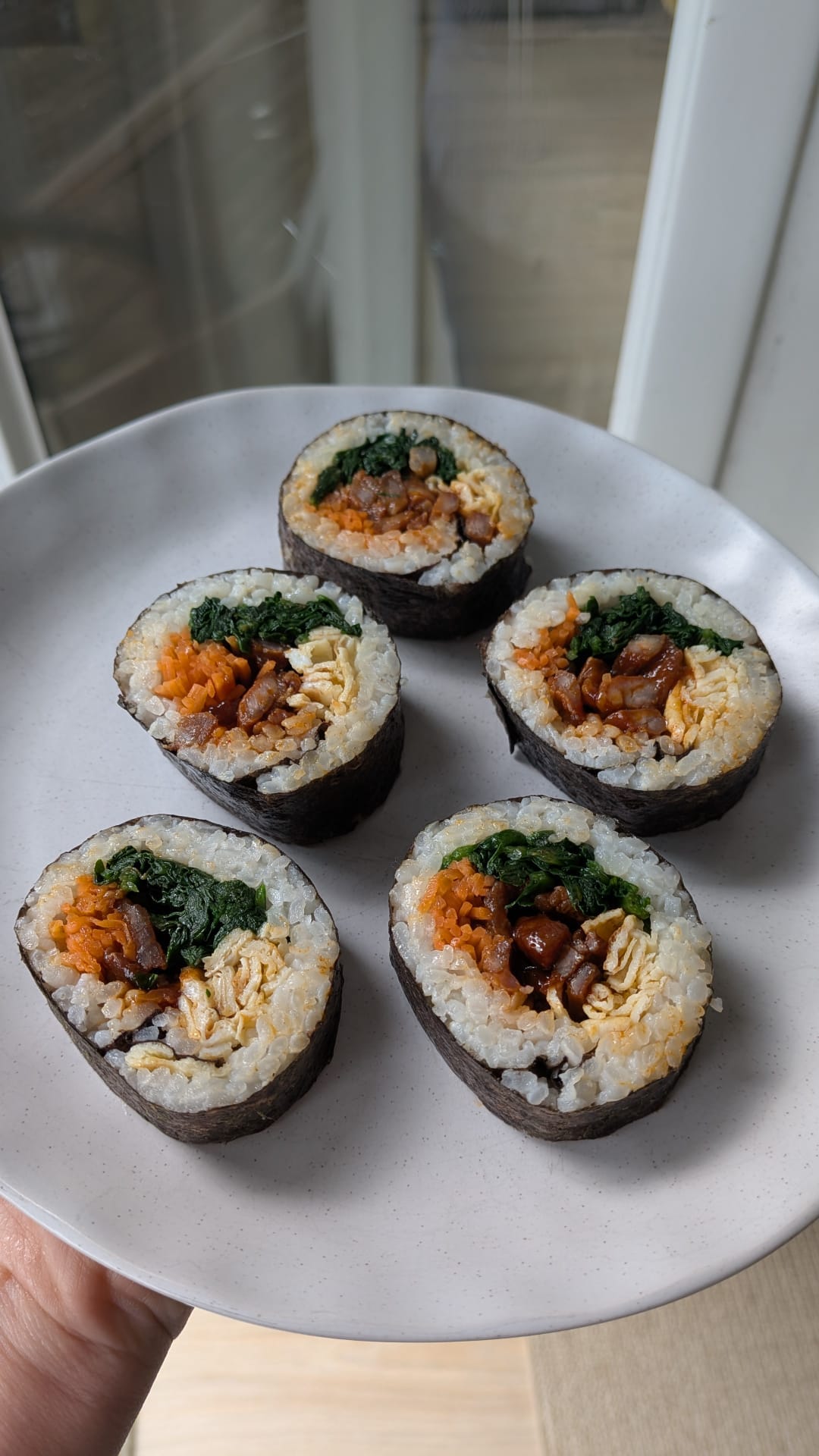
Enjoy kimbap at room temperature. In warm weather, kimbap makes the perfect picnic or snacking food, tightly stacked into lunchboxes and eaten away in layers as the day progresses. Leftover sliced kimbap can be refrigerated and dipped in egg and pan-fried to refresh them.
Rice for kimbap
Makes approximately 750g cooked rice (enough for 4 rolls)
300g short-grain rice (often sold as sushi rice)
500g water
1 tbsp sesame oil
1½ teaspoon salt
Rinse the short-grain rice until the water runs clear. Drain well and add to a rice-cooker with the water. Cook until tender. (Alternatively, combine the rice and water in a saucepan. Set over high heat and stir occasionally until the water comes to a simmer. Cover and cook on low heat until all the rice is absorbed.) Stir the sesame oil and salt into the cooked rice. Cool until warm before using for kimbap, or refrigerate in an airtight container and reheat before use.
Gochujang pork / smoked salmon kimbap
Makes 4 rolls