
ichigo daifuku
(strawberry mochi)

Mochi is something that the students at my cooking classes get excited about. I don’t teach it at the moment, but I’ve had a few requests, which is surprising because mochi has a softly gelatinous and chewy texture that not everyone is a fan of. One of the most popular ways to enjoy it is as small sweet dumplings known as daifuku, where the dough is stretched around a filling of red bean paste, ice cream, cream, or fruit.
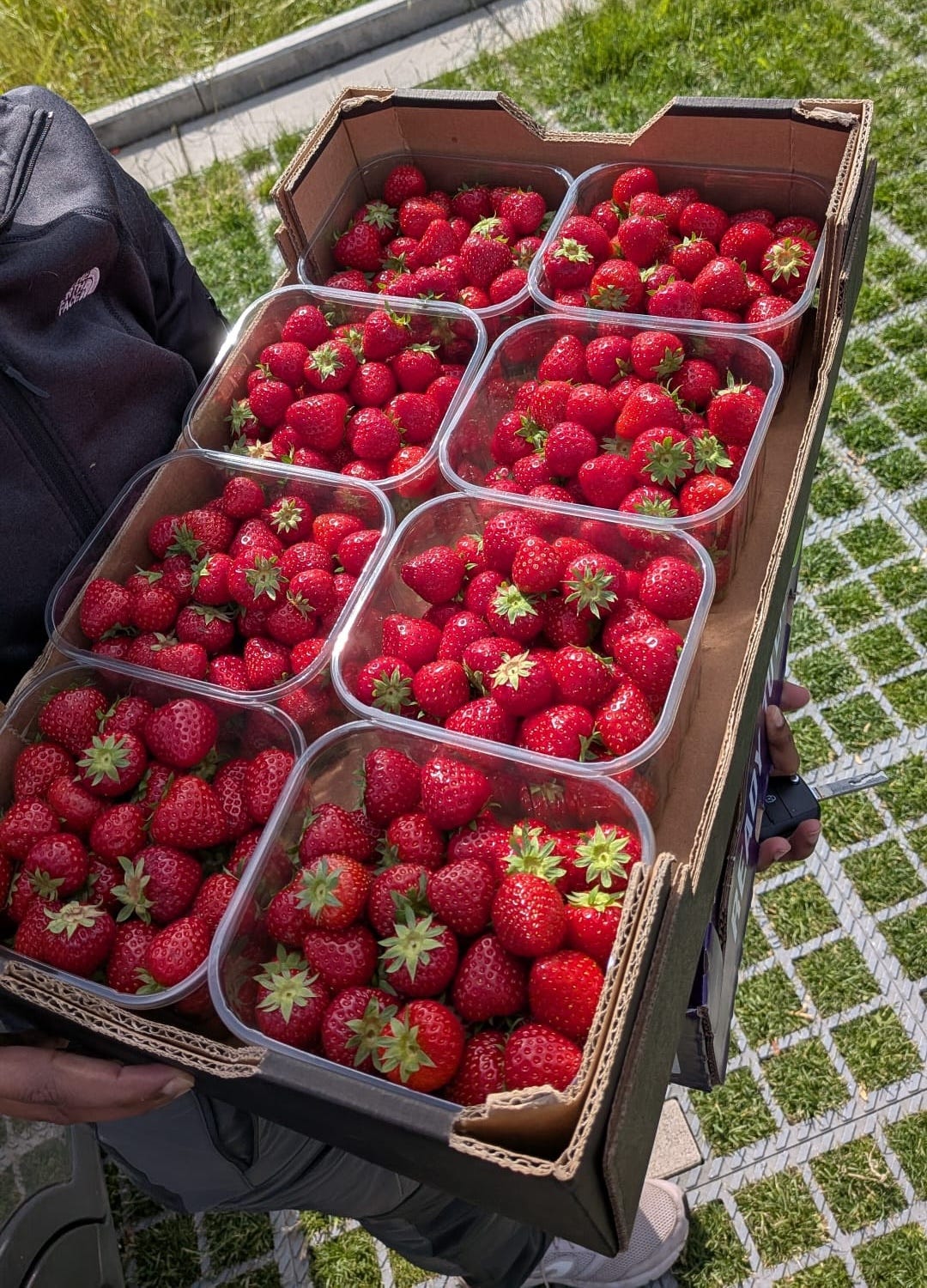
While Wex and I were in Germany camping last weekend, we spotted some beautiful strawberries and ended up splitting a box of eight punnets with friends. Because the strawberries were so ripe and perfumed, I thought that they would be perfect for ichigo daifuku, or strawberry and bean paste wrapped within a thin layer of mochi.
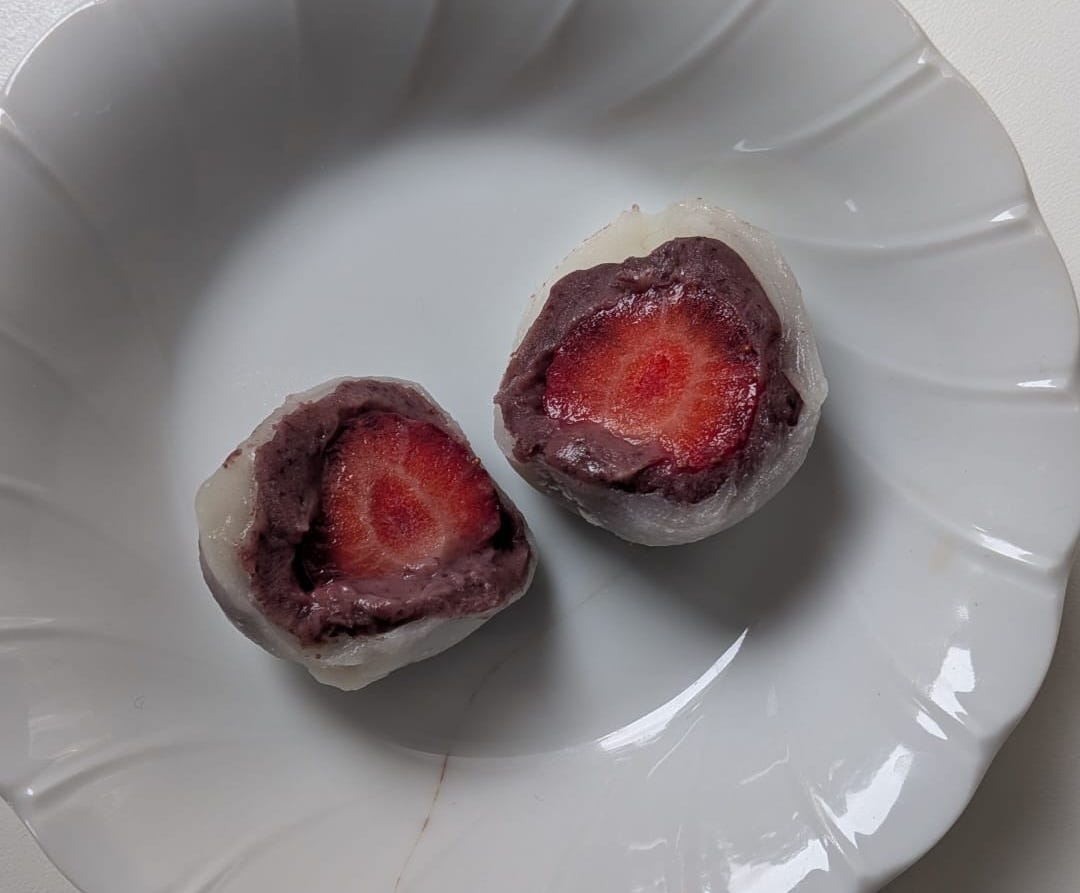
Ichigo daifuku is deceptively difficult to make. They look simple, but require attention to detail. With my first attempt, I didn’t pay attention to the orientation of the strawberries the mochi skin wasn’t evenly thick all around the filling, so the dumplings didn’t look very pretty when sliced. That said, I shared some with a friend who lives down the street, and she loved it. Her rave reviews convinced me that I was on the right track, and that it was worth making a second batch.

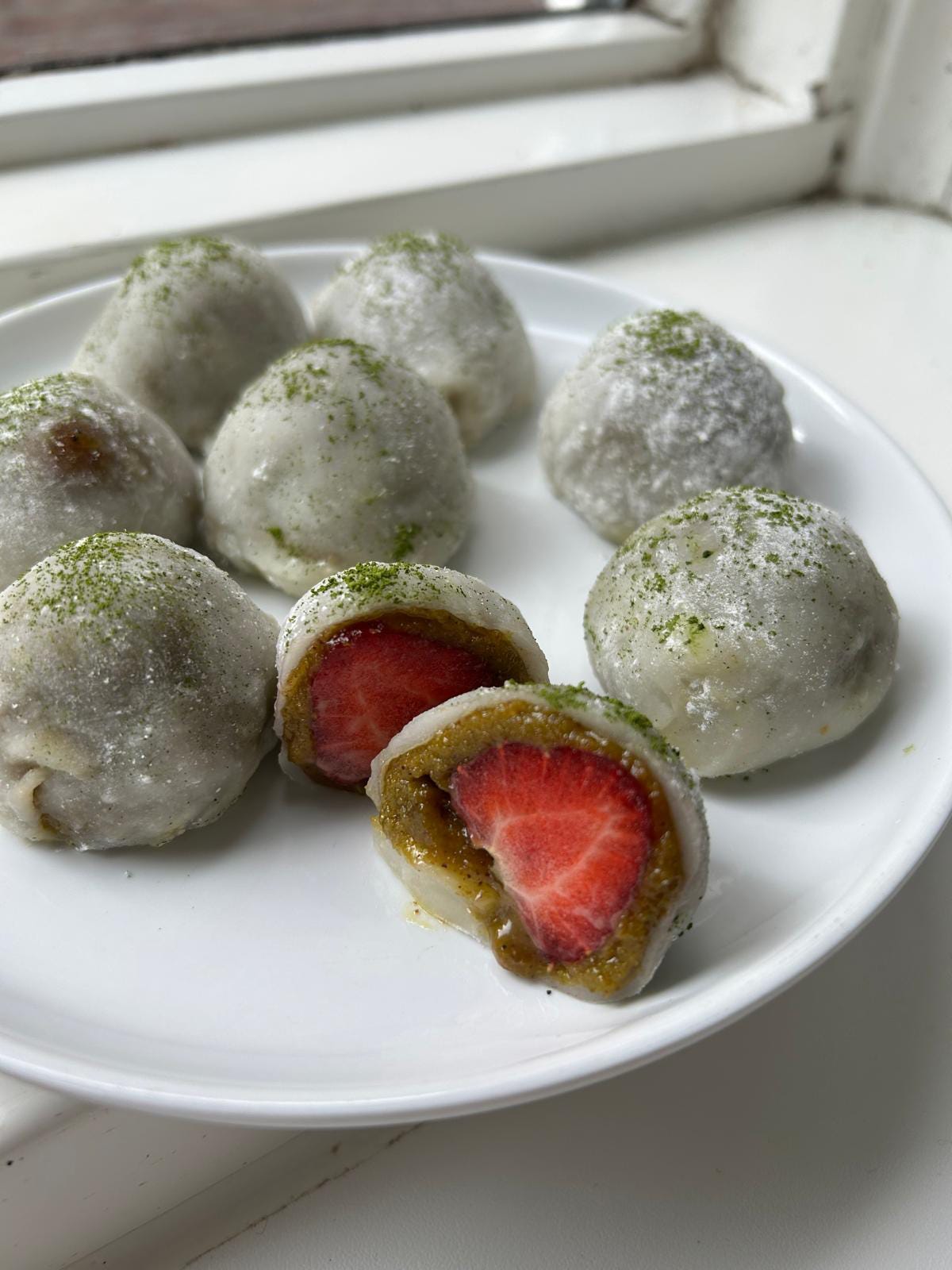
For my second attempt, in addition to refining the technique, I chose to go with a pistachio filling and finished the mochi with a light dusting of matcha. I was pleasantly surprised at how luscious it tasted — the pistachio filling oozed beautifully and complemented the juiciness of the strawberry perfectly.
THE BEAN / PISTACHIO FILLINGS
Ichigo daifuku is traditionally made with adzuki bean paste. Unfortunately, the bean paste from my local Asian supermarket is rather disappointing. The alternative was to make my own from scratch but frankly, I didn’t feel like cycling across town to buy dried adzuki beans, so I turned to an ingredient I always have in my pantry: canned red kidney beans.
I’ve made bean paste with canned black beans / red kidney beans in the past, such as for my red bean pancake. While it doesn’t taste the same as adzuki bean paste, for something that comes together in a fraction of the time, they are a great substitute.
Canned beans are incredibly quick to transform into a paste. Simply blend them with sugar and oil until smooth, then cook the mixture gently. As it heats, the starch granules in the beans absorb water and thicken the slurry into a spreadable paste. The key is to cook it until it holds its shape and you can see the bottom of the pan as you stir. Allow the paste to cool completely, as it will continue to thicken as it cools.


The pistachio filling is even simpler to make. All I did was blend the pistachios with icing sugar and honey until the mixture transformed from a fine rubble into a crumbly paste as the nuts began releasing their oils. To enhance the softness and pliability of the mixture, I added a little oil.


THE STRAWBERRIES
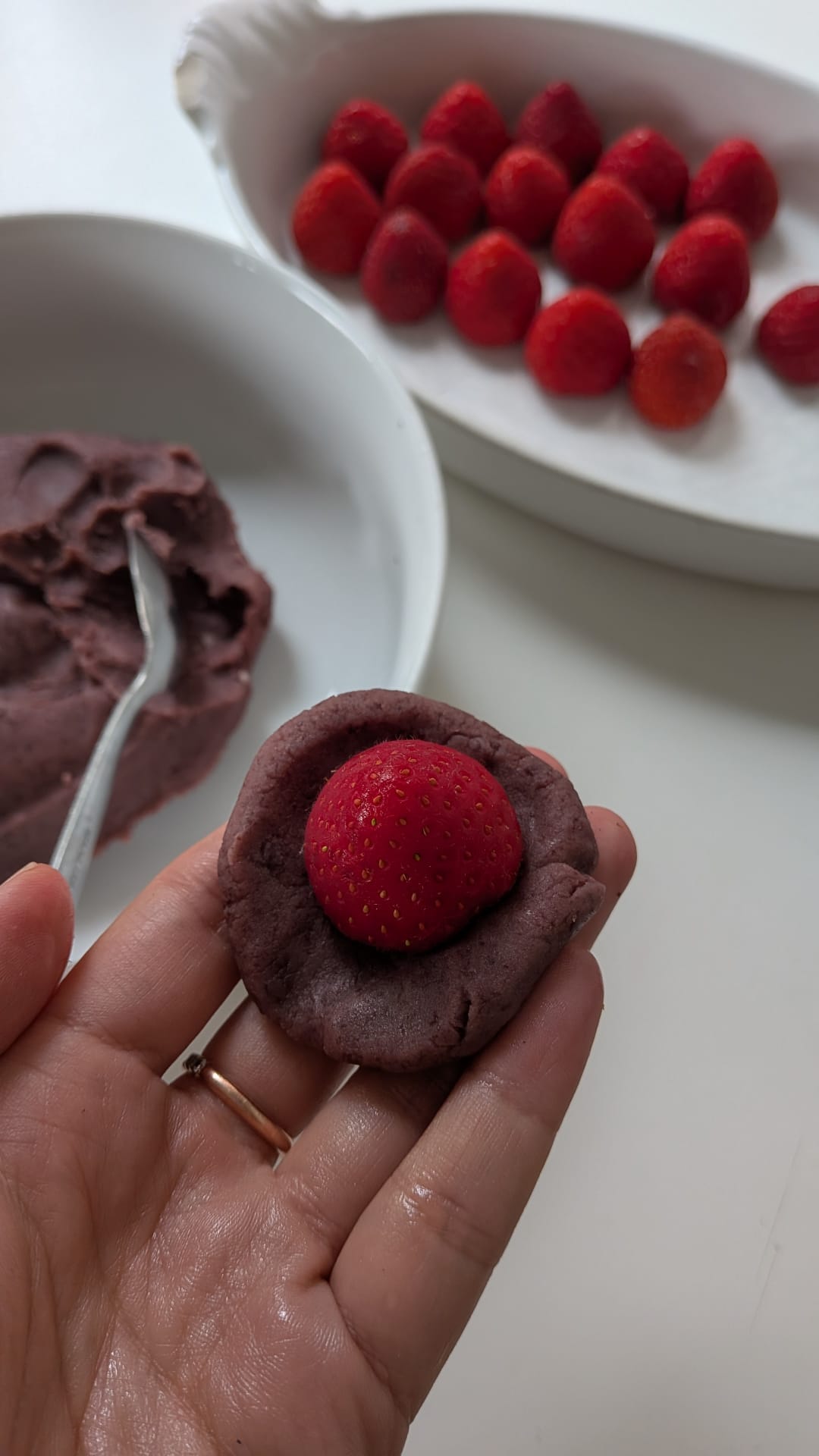
With ichigo daifuku, the size of strawberries matters. Smaller ones are ideal, as they will be encased in bean / pistachio paste and mochi. If they are too large, the ichigo daifuku loses its dainty appearance.
Because the pastes can be sticky, I found that the quickest and easiest way to wrap the strawberries is with a sheet of plastic. For the best presentation, keep the strawberry tips pointing upwards while wrapping and place them upright on a plate (the creases left by the plastic will also serve as a useful visual cue for the strawberry’s orientation).


THE MOCHI SKIN
The mochi skin is traditionally made with shiratamako or mochiko, Japanese glutinous rice flours made specifically from a wet-milling process. For accessibility, I went with generic glutinous rice flour — made by dry-milling raw glutinous rice to a fine powder — because it’s easier to source.
Most recipes I’ve seen call for cooking the mochi dough in the microwave, heating it in short bursts and mixing between each interval with a spatula. While effective, it can be difficult to control the cook of the mochi in a microwave. I resorted to cooking the dough on the stovetop, but the dough cooked rather unevenly because of how viscous and sticky it is. Eventually, I settled on steaming the slurry instead, which gave much more consistent results. The mochi is ready when it changes from bright white to slightly off-white and no longer has a powdery mouthfeel. The best way to check is to snip off a tiny piece from the centre and taste it.


WRAPPING
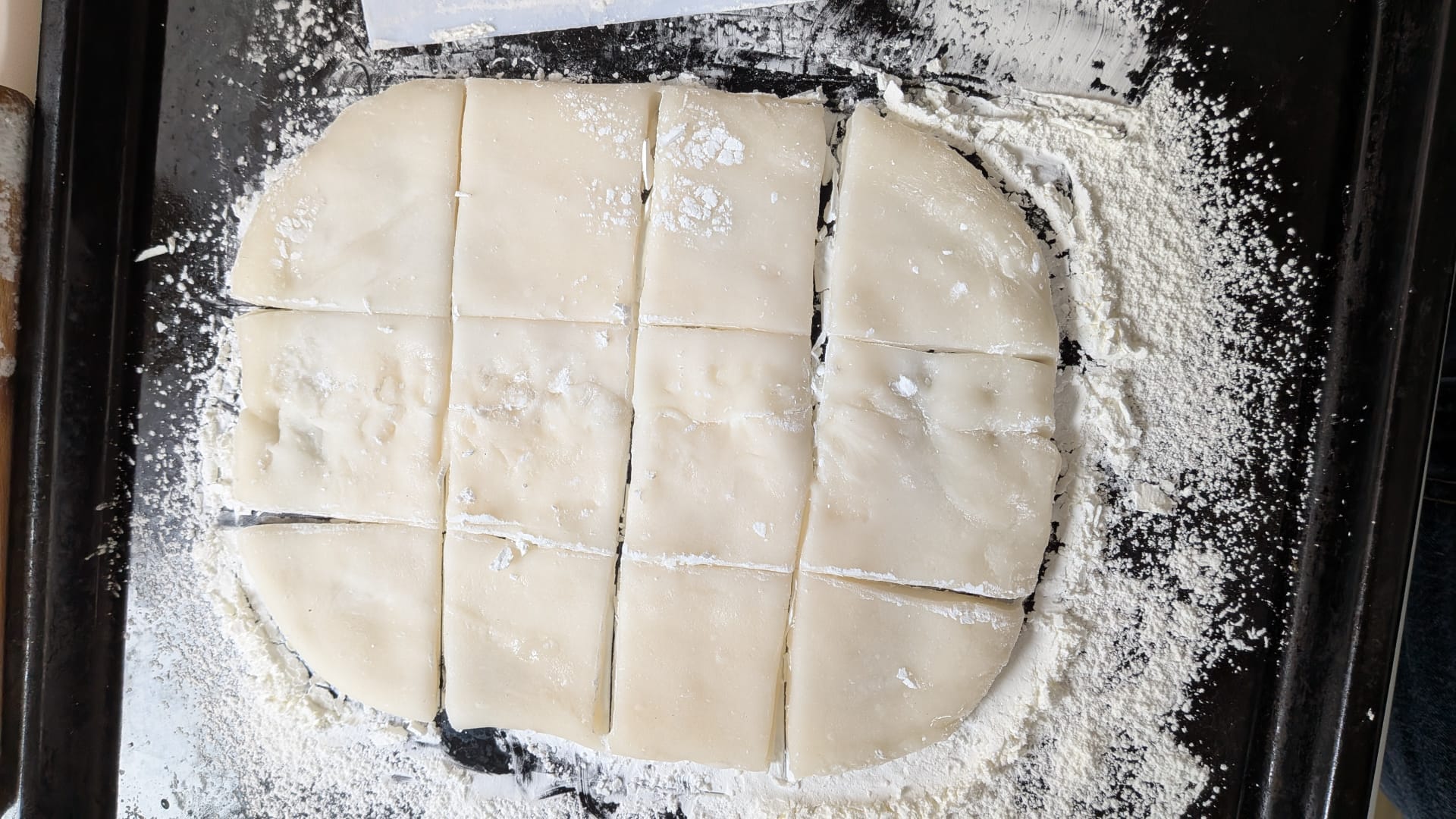


For other types of dumpling wrappers, I would typically weigh each portion of dough to ensure perfectly even pieces. However, mochi is so sticky that a different approach works better. I pat the dough into a rectangle on a tray dusted generously with cornstarch, then cut it into individual portions. To even out the thickness of each piece, I roll each portion out slightly before wrapping. I place the strawberry tip-side down on the mochi, gather the wrapper around the filling, and trim away any excess with kitchen scissors. This gives the daifuku a beautifully even layer of mochi all around.
Once wrapped, the ichigo daifuku will keep for a few days in an airtight container in the refrigerator, but is best eaten the day it is made, when the skin is the softest and delightfully chewy.
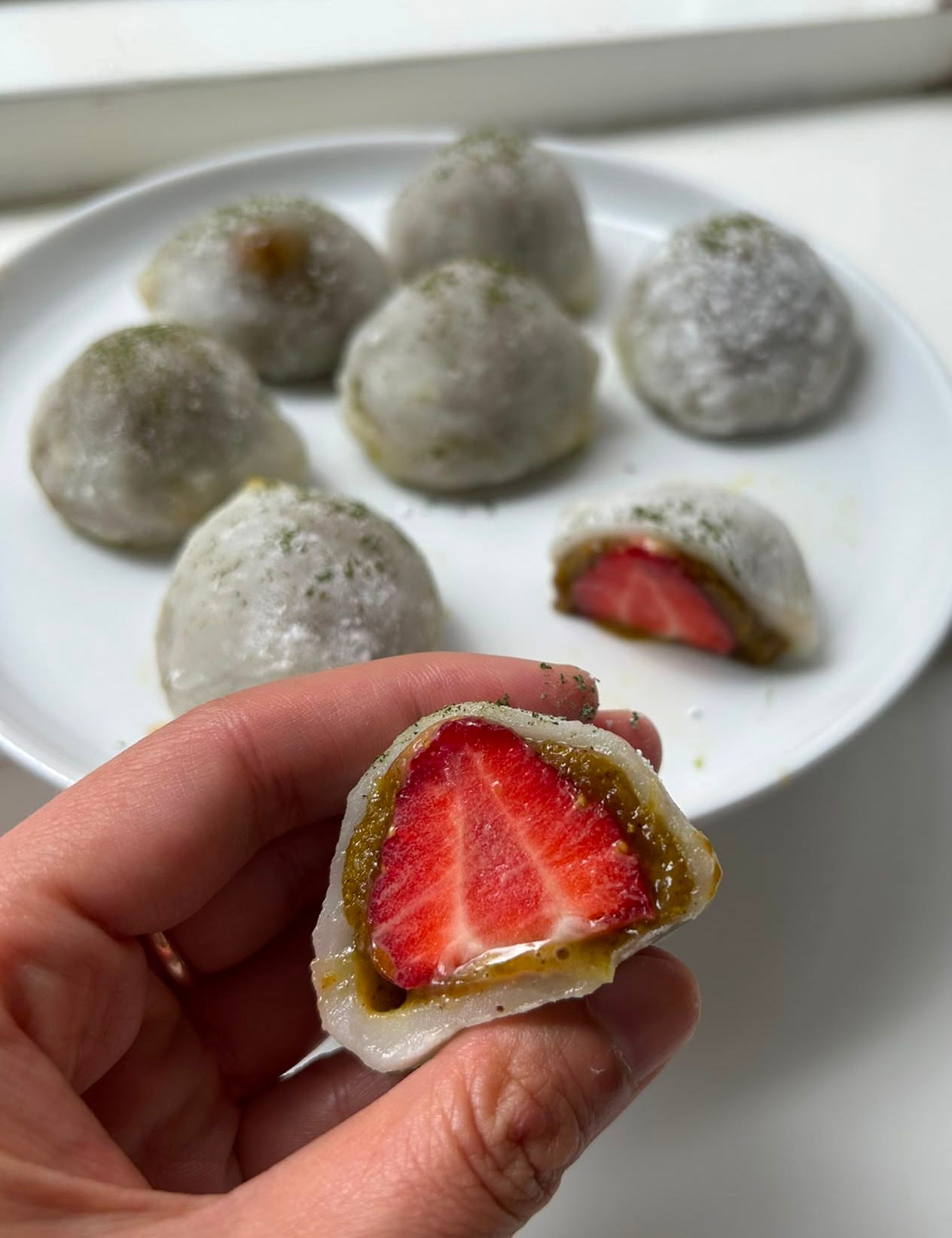
Ichigo daifuku
Makes 12 | Vegan