
taro toast
(a modern interpretation of kaya toast)

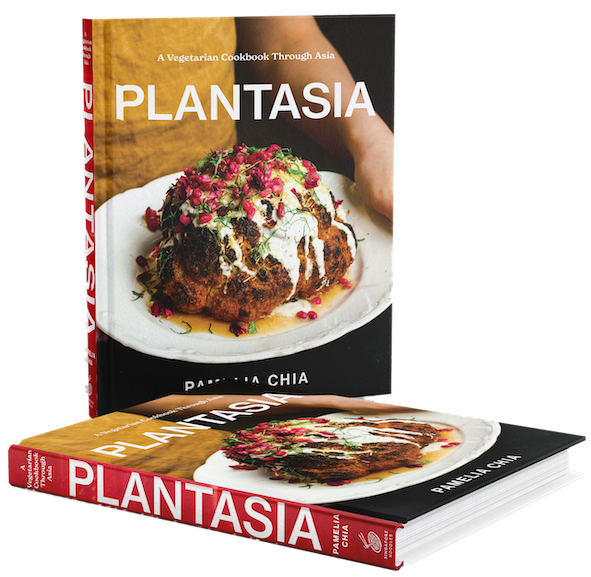
Welcome back to the Singapore Noodles newsletter! Before we get to this week’s recipe, a note on PlantAsia. If you’ve been enjoying these weekly deep dives into recipes, techniques, and food history, you’ll probably enjoy PlantAsia as well. The book follows the same curiosity — combining recipes with stories, ingredients, and the cultural traditions behind them. The original self-published edition is still available on my website. Once the remaining copies in Singapore are gone, I won’t be replenishing stock, and this edition will not be reprinted.
Thank you for reading, and now onto this week’s recipe.
TARO TOAST
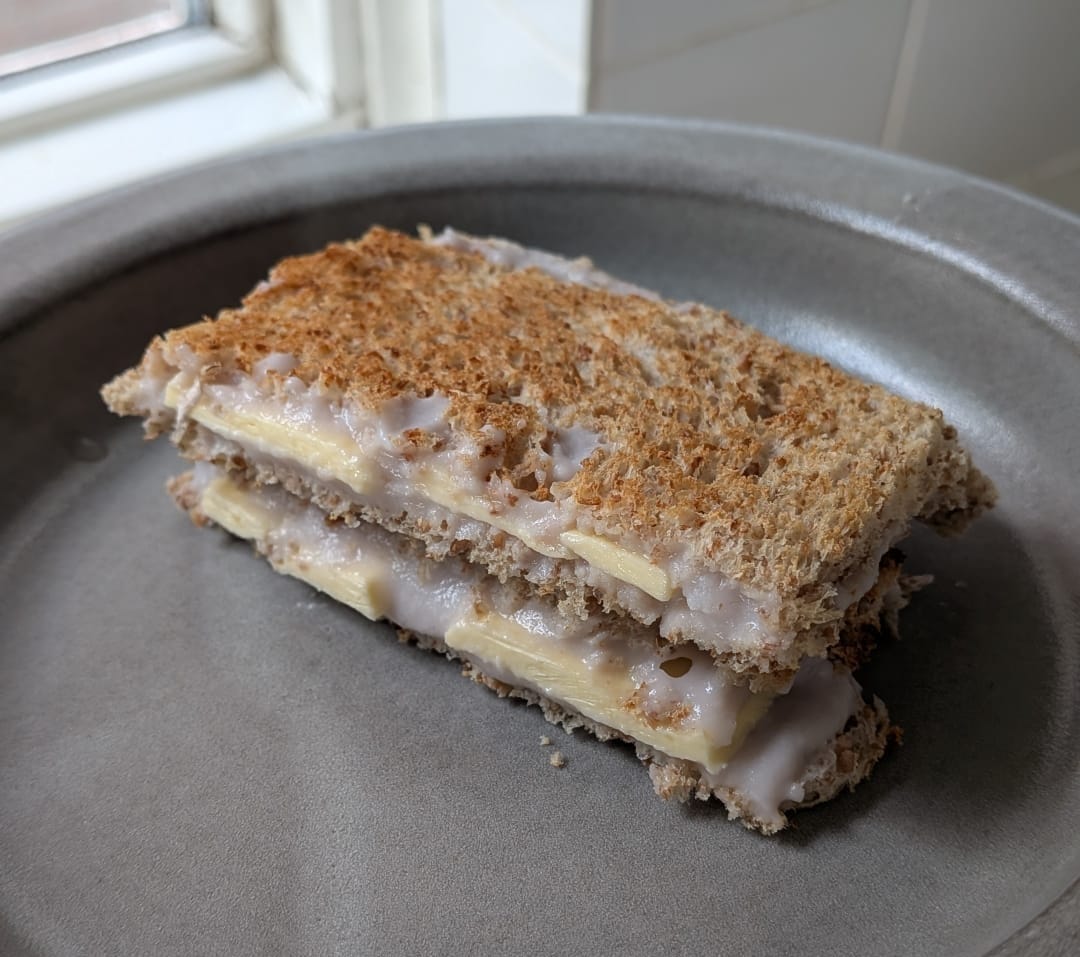
In Singapore, the national breakfast is kaya toast — toast filled with eggy, pandan-scented curd and shards of cold salted butter. The textures are lovely together: a single slice of bread toasted until it is so crunchy it is almost cracker-like, the oozing kaya, and smooth slabs of butter usually thick enough to leave teethmarks. Since moving abroad about 8 years ago, I’ve noticed a modern interpretation appearing in cafés which features a taro spread (orh nee 芋泥) instead.
Taro is an edible corm. It has ivory flesh with purple striations which, when steamed, has a powdery mouthfeel and sweet earthiness that works well in both savoury dishes and desserts. It is the star ingredient in orh nee, a traditional Teochew dessert where steamed taro is rendered into a luxuriously smooth paste with sugar and lard or shallot oil. While the traditional accompaniments for orh nee are pumpkin puree, fried shallots, and gingko nuts, some eateries also serve it with lashings of coconut milk.
Making taro spread is easy. I sliced up the frozen taro I’d bought from the Asian supermarket and steamed it until fork tender. While the taro steamed, I infused some water with pandan leaves. I then blended the taro with the pandan-infused water, sugar, oil, and salt. While the quantity of sugar to add is up to you, for the purposes of taro toast, I recommend a higher amount to approximate the sweetness of kaya. I stir in coconut cream at the end; if you blend coconut cream, sometimes it can lead to an off-smell from the coconut heating up and breaking down.


All that’s left to do is to simmer the mixture until it reaches your desired consistency. For maximum ooziness, I’ve kept it quite runny — just until you can see the bottom of the pot as you stir. Refrigerate the spread until it is thoroughly chilled.
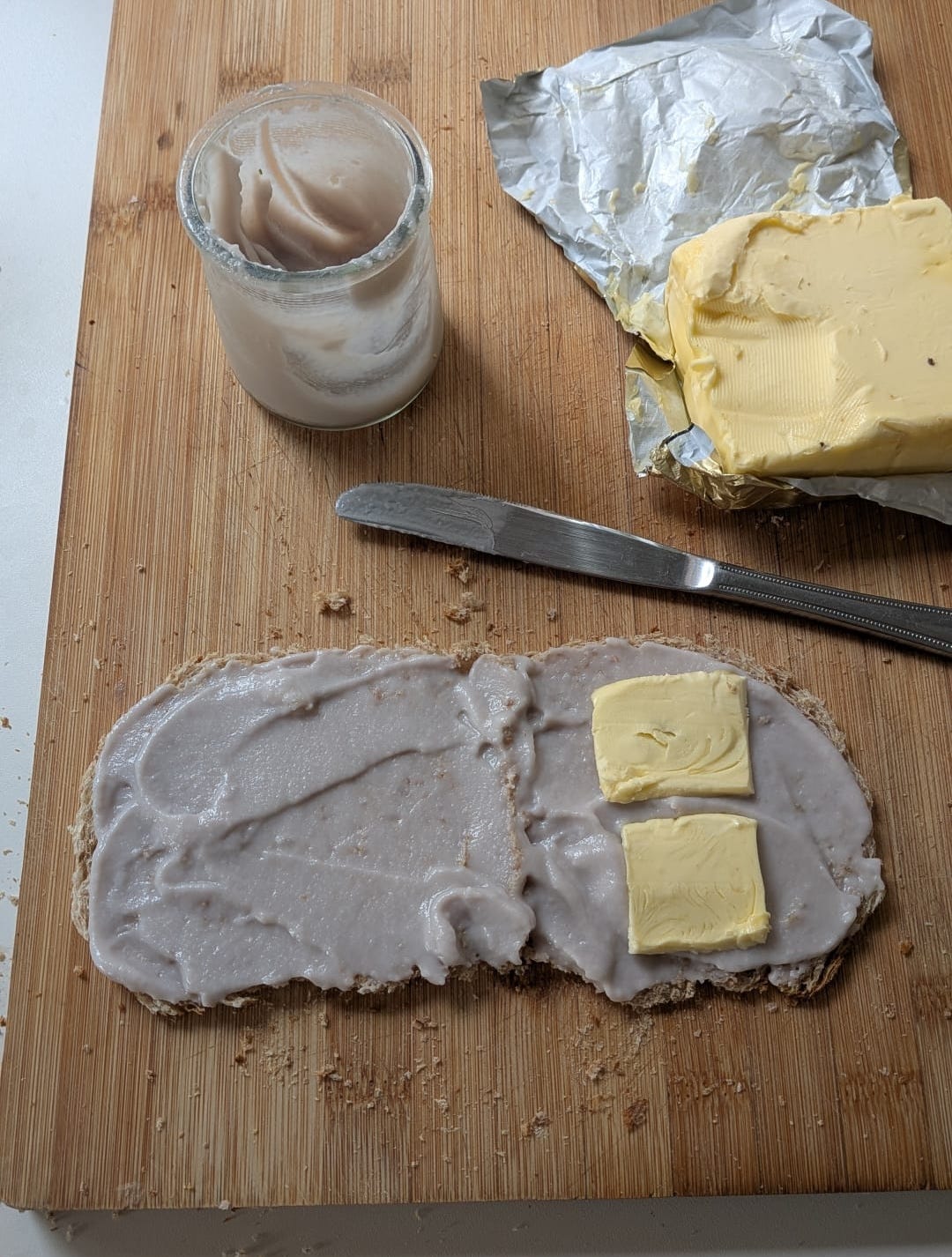
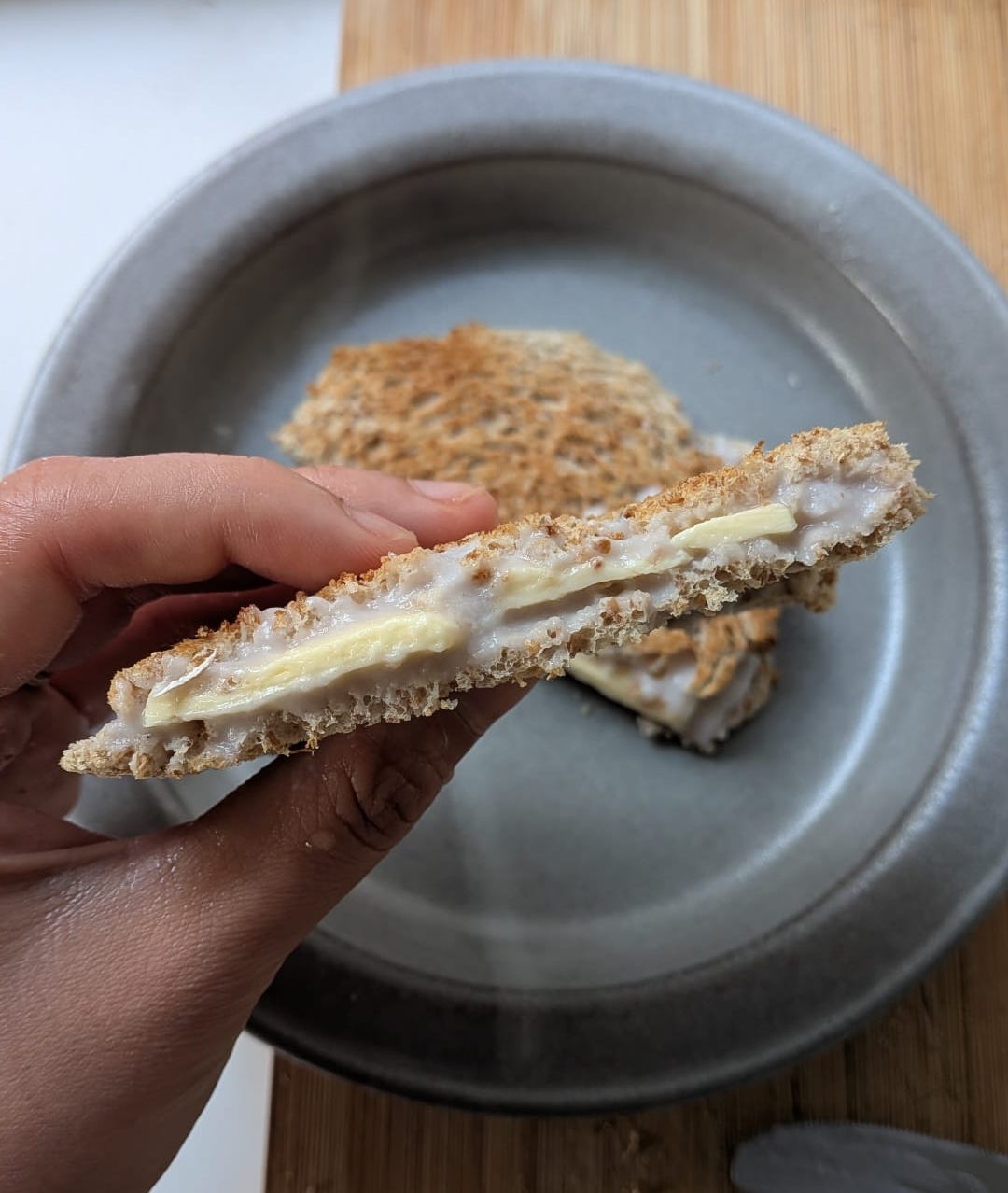
For the taro toast, any sandwich bread will do — white or brown both work. The key is to toast it really well and cut off the crusts. Slice it in half with a serrated knife and slather the taro spread generously on both sides. Top with as much butter as you dare. It is important that the butter is good quality (I like Kerrygold). Close the sandwich and slice it in half to expose the oozing cross-section and enjoy.
Taro toast
Makes about 1/2 jam jar’s worth