
krapao gnocchi
made with homemade gnoccchi (traditionalists, look away!)

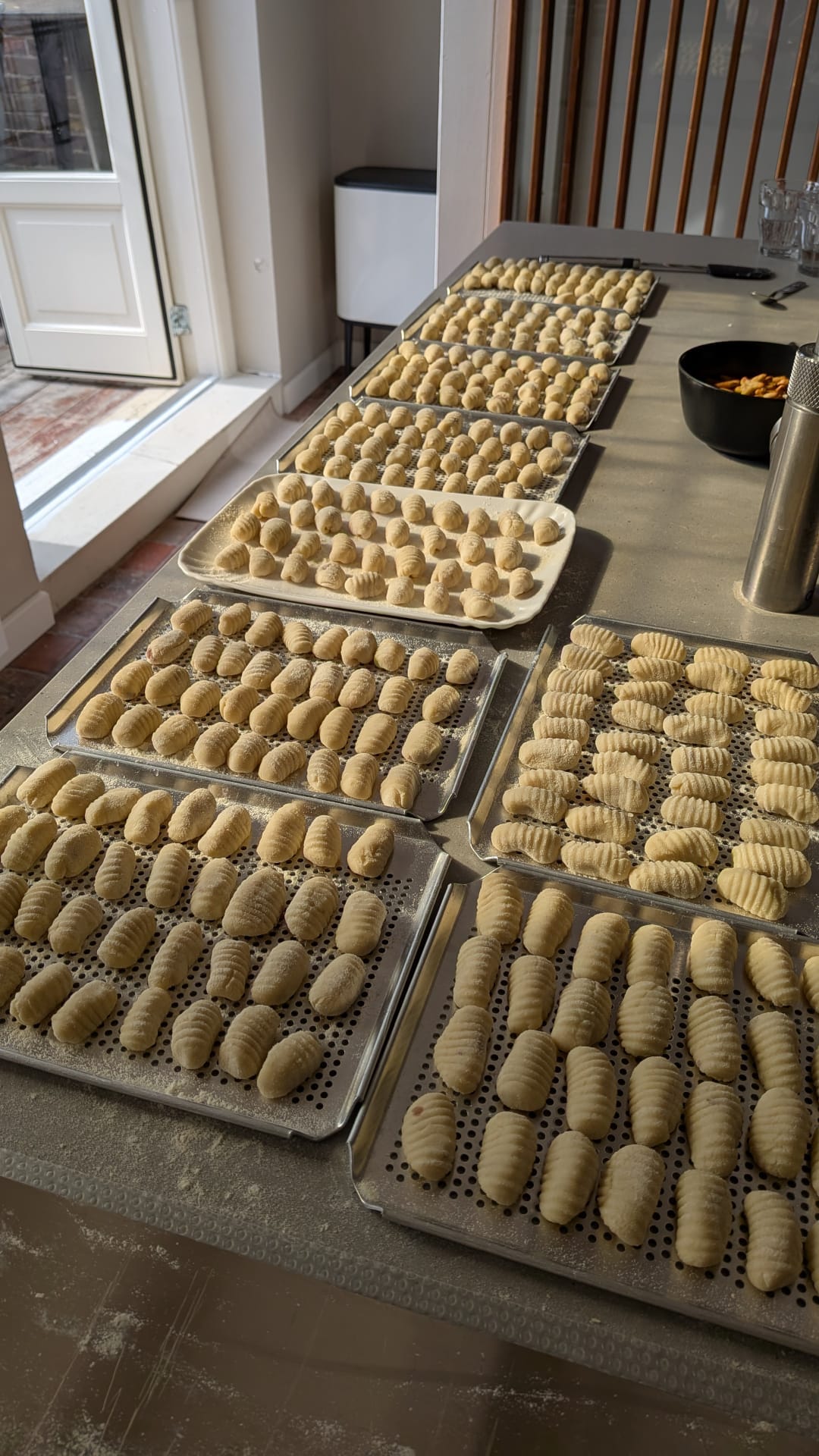
It is always a treat to be invited to someone’s home to cook alongside them. Over the weekend, our Italian friends Fabio and Elisa had us over for dinner. Elisa said, if I wanted to, I could arrive a few hours earlier to watch her make gnocchi. I, of course, said yes.
I was first shown how to make gnocchi during a short stage at the restaurant Etta in Melbourne. That was my first taste of how incomparably light gnocchi could be when made with care. Supermarket gnocchi could never, and I raise my eyebrows whenever I see “springy” or “chewy” as a descriptor for gnocchi. During our recent trip to Italy, we ordered gnocchi on several occasions and were disappointed each time by how stodgy they were. I was ready for some good gnocchi and was curious about how an Italian would approach making it at home.
Elisa is a meticulous cook. Her kitchen shelf is lined with books on Italian gastronomy which expound on the science and art of the craft, and she seems to have just the perfect tool for every task. The ragu recipe she recently sent me is 8 pages long, replete with explanations, just to illustrate the pride she takes in cooking. But as with many experienced home cooks I’ve had the pleasure of joining in their kitchens, she works with remarkable ease and simplicity. Nothing too fussy, and everything relying upon instinct.
We began with the potatoes. Most cooks would advise you to use a floury potato, such as the Russet potato, but Elisa favours the waxier, red-skinned ones which cohere better when cooked and riced. Rather than boiling the potatoes in water, she steamed them in her Instant Pot. This marked another departure from the norm, but made a lot of sense. After all, the goal with gnocchi is to keep the moisture levels of the cooked potato as low as possible, so that you require less flour to bind it into a dough. Less flour = less gluten = more delicate texture.
While the potatoes were still warm, Elisa pressed them through her ricer. Ricing is preferable to mashing because it produces an even texture with no lumps, and you get a light, fluffy mound of potato as opposed to a gummy mass. At Etta, the cooks pushed the cooked potato through a metal sieve, which achieves a similar effect (I do this because I don’t own a ricer).


Once riced, the potato and flour were combined in a stand-mixer — this surprised me. I’d always heard the advice to work the dough as delicately as possible, but Elisa’s insouciance was proof that the amount and type of flour matters more.
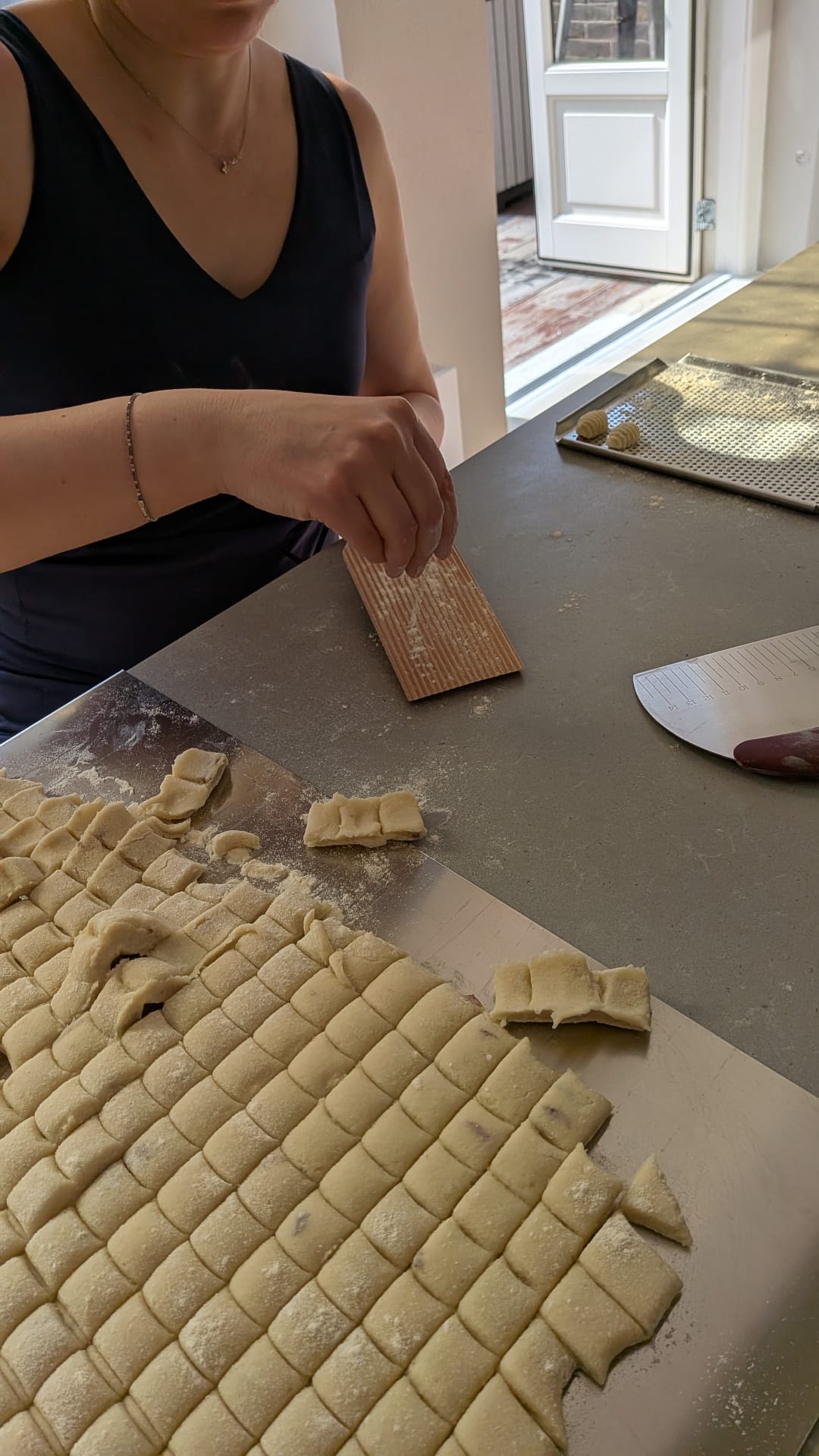
The real brilliance of Elisa’s method lies in the shaping. Rather than fussing about with forming ropes of dough and nipping them into individual pillows, she rolled the mass out between pastry strips for an even thickness. The flat rectangle of dough was then cut into cubes, that we rolled into marbles between our floured palms. Finally, we pushed the dumplings along a gnocchi board to give them their characteristic ridged backs. For dusting, Elisa likes finely milled semolina flour for the way they prevent the dough from sticking more effectively than conventional wheat flour, though this is not strictly necessary.


We cooked the gnocchi in barely simmering water, and tossed them in Elisa’s homemade tomato sauce. In the Sorrentina tradition, we layered them with torn mozzarella (drained to remove excess moisture) and grated grana padano, then grilled them in the oven until the top was nice and bubbly.


Elisa initially worried that they may be too light — she is haunted by the leaden lumps that her nonna used to make, and always errs on the side of using less flour. Gnocchi are good only if they are light, but Elisa confessed that sometimes she puts so little flour in hers that she worries they may fall apart. But they were perfect — incredibly light, almost melting in the mouth.
It was clear that the lightest gnocchi involve straddling the line between not enough flour and just enough flour, and a certain residue of doubt in the cook’s mind. Sadly, because this type of gnocchi requires a bit of patience and is a lot more delicate to handle, Elisa says that it is not at all common in restaurants, where speed and efficiency are king.
Yesterday, I cooked the gnocchi for dinner so that I could go over everything before I forget, and to get the quantities down. Instead of doing a tomato sauce like Elisa did (the weather was too hot for that!), I chose to use the gnocchi in krapao. This is a fragrant stir-fry of mince, garlic, chillies with lashings of sweet soy and fish sauce, and a generous handful of basil (traditionally holy basil, which Italian basil is a great substitute for). As krapao is typically a meat dish, I added snow peas to balance the meal out. It turned out fabulous. The starch from the gnocchi actually helped to thicken the meat juices in the pan such that the rubbly mixture clung to it like a second skin.
With just two ingredients in the gnocchi — potatoes and flour — it’s really more about developing a sensitivity and feel for the dough rather than slavishly following a recipe. The lightest gnocchi — made with the smallest amount of flour you can get away with — are great in a tomato sauce, while slightly firmer gnocchi stand up to stir-fries. I might even add a touch of tapioca flour next time for a touch of springiness!
If you make a big batch of gnocchi, you can freeze any extras on a tray (spaced apart) while still raw, then transfer to a ziplock bag or container to keep in your freezer until ready to use. To cook, simmer in water until they float.
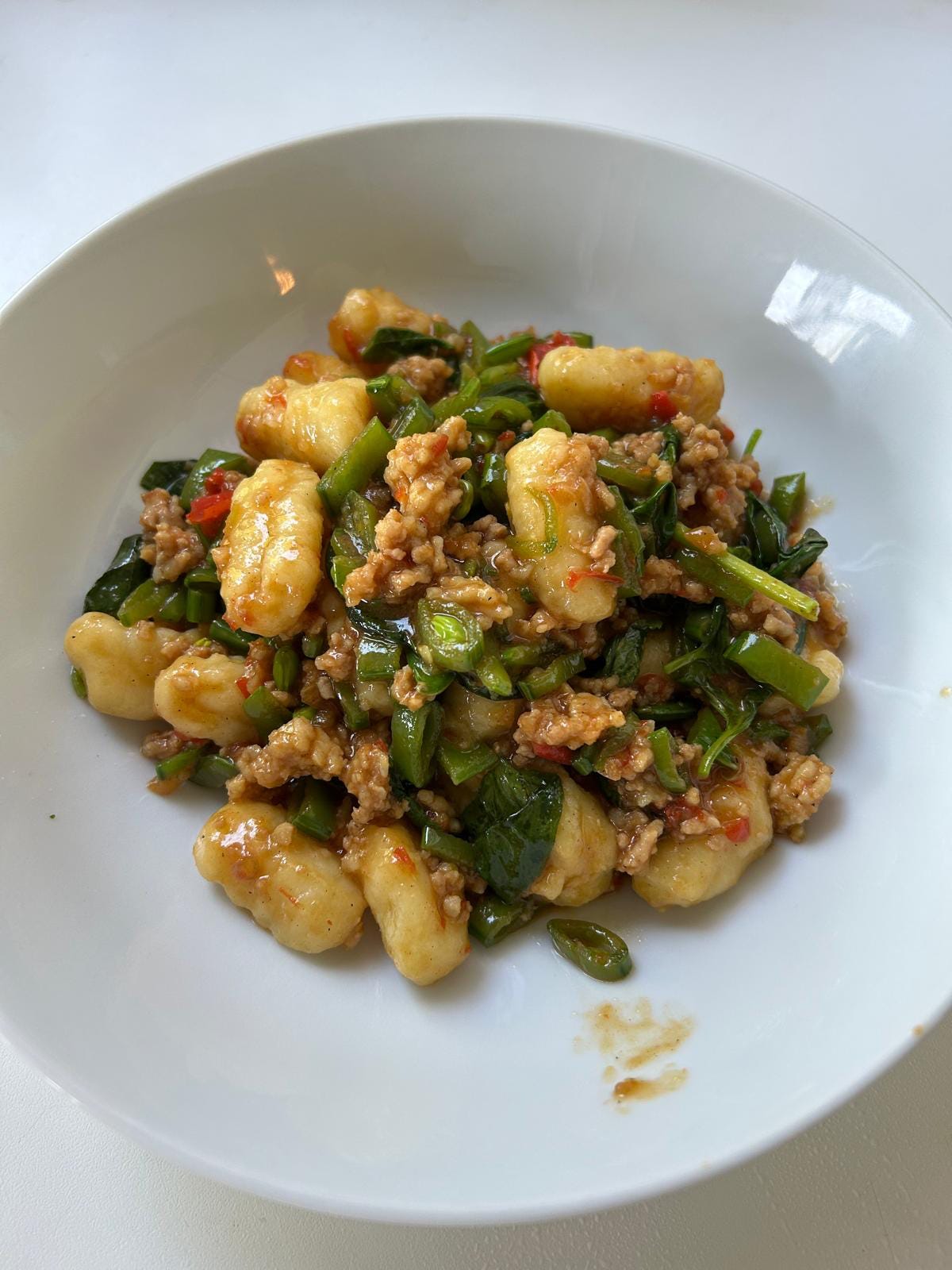
Krapao gnocchi
Feeds 2